
Most human activities that use water produce wastewater. As the overall demand for water grows, the quantity of wastewater produced and its overall pollution load are continuously increasing worldwide. Over 80 per cent of the world’s wastewater – and over 95 per cent in some least developed countries – is released to the environment without […]
Author Archives: sahabco
Groundwater overview – Making the invisible visible

Globally, invisible groundwater resources are under increasing pressure due to human activities and climate change. Our response to this pressure is often not adequate, also due to limited awareness of the importance of groundwater resources. The United Nations report that was published in September 2018 is entitled Groundwater Overview, The report is prepared to showcase the […]
Technical and Economic Evaluation of the Use of Variable Speed Pumps in the Backwashing of Rapid Sand Filters (A Case Study)

It is observed that physical changes in the filter as bed media size variation, nozzle breakage, or water temperature variations lead to changes in the backwash regime throughout the year. The remedy proposed in this article is to use variable speed pumps in order to maintain a constant and steady optimum regime. In this study, […]
Dissolution Behavior of Silver Nanoparticles and Formation of Secondary Silver Nanoparticles in Municipal Wastewater by Single-Particle ICP-MS
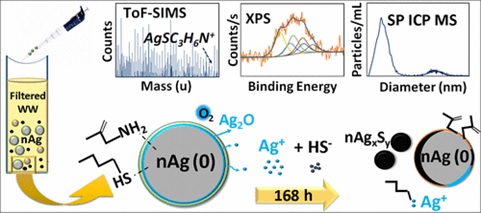
Ag nanoparticles (nAg) are used in various consumer products and a significant fraction is eventually discharged with municipal wastewater (WW). In this study we assessed the release of Ag from polyvinylpyrrolidone (PVP)- and citrate-coated 80 nm nAg in aerobic WW effluent and mixed liquor and the related changes in nAg size, using single particle ICP-MS […]
Measurement and Analysis of Silver Nanoparticles in Wastewaters with Single Particle ICP-MS
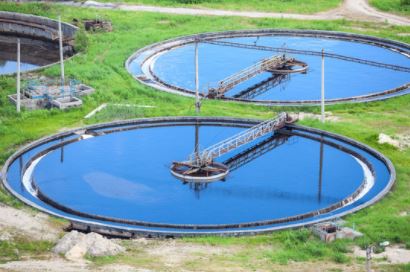
The drastic increase in production and consumption of engineered nanoparticles (ENPs) has raised the concern and questions about their release into the environment and potential harm to aquatic and terrestrial species. The characteristic properties of nanoparticles, such as small size and high specific surface area and reactivity, make them desirable for their use in various […]