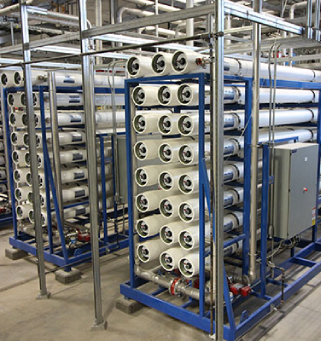
Biofiltration is the use of microorganisms growing in a media bed to remove and oxidize compounds in a foul air stream. This technology is becoming widely accepted as an effective odor control technology at municipal wastewater treatment plants throughout the United States and Canada. Biofilters have been shown to effectively remove odor causing compounds such as hydrogen sulfide, ammonia, methyl mercaptan, dimethyl disulfide, other odorous reduced sulfur organic compounds and volatile organic compounds (VOCs). Biofilters are cost competitive when compared to other odor control technologies such as wet scrubbers, carbon adsorption and thermal treatment. A typical biofilter consists of a media bed containing contaminant-degrading microorganisms, a medium to support the microorganism colony, a medium support structure, a foul air distribution system and a method of controlling the biofilter moisture content. Two general types of biofilter configurations are available: in-ground, open vessel systems and modular closed vessel systems. The open bed systems typically have a low capital cost requirement compared to closed vessel biofilters, but are more land intensive. Closed vessel, modular biofilters are offered by various manufacturers. Costs are typically higher than costs for an open bed biofilter treating the same airstream. The main advantages of closed vessel biofilters include a smaller footprint requirement, automated controls, less exposure to moisture variations, and the ability to effectively monitor emissions. A suitable environment must be provided to sustain the microorganisms responsible for the biofiltration process. Operation and design factors to consider include moisture control, nutrients, stability, foul air residence time and temperature, airflow distribution, leachate control and media. Various biofilter media are available, and the selection of the media type has evolved over time and continues to evolve. Common materials include soil, peat, bark, wood chips, compost, heather and inert additives such as plastic packing, perilite and ceramics. The most common media choices are soil, bark and compost. A mixture of soil, bark, compost and synthetic material is also a popular choice. There are advantages and disadvantages for each type of media that must be carefully evaluated during the biofilter design process. Biofilter performance at municipal wastewater treatment plants has been very positive. Removal in excess of 99% has been reported for compounds such as hydrogen sulfide, mercaptan, and dimethyl sulfide. In addition, field experience indicates that hydrogen sulfide inlet concentrations upwards of 150 ppm can experience 99% removal.